
If you’re dreaming of a sleek, creamy stone with elegant veining for your kitchen or bathroom, you’ve probably come across “Taj Mahal” — a name that can refer to two very different materials: Taj Mahal Quartzite and Taj Mahal Quartz. While they might look similar at first glance, their fabrication processes and price tags tell a different story.
In this post, we’ll break down the cost differences between the two and explain why Taj Mahal Quartz is the more budget-friendly option when it comes to fabrication and installation.
What Is Taj Mahal Quartzite?
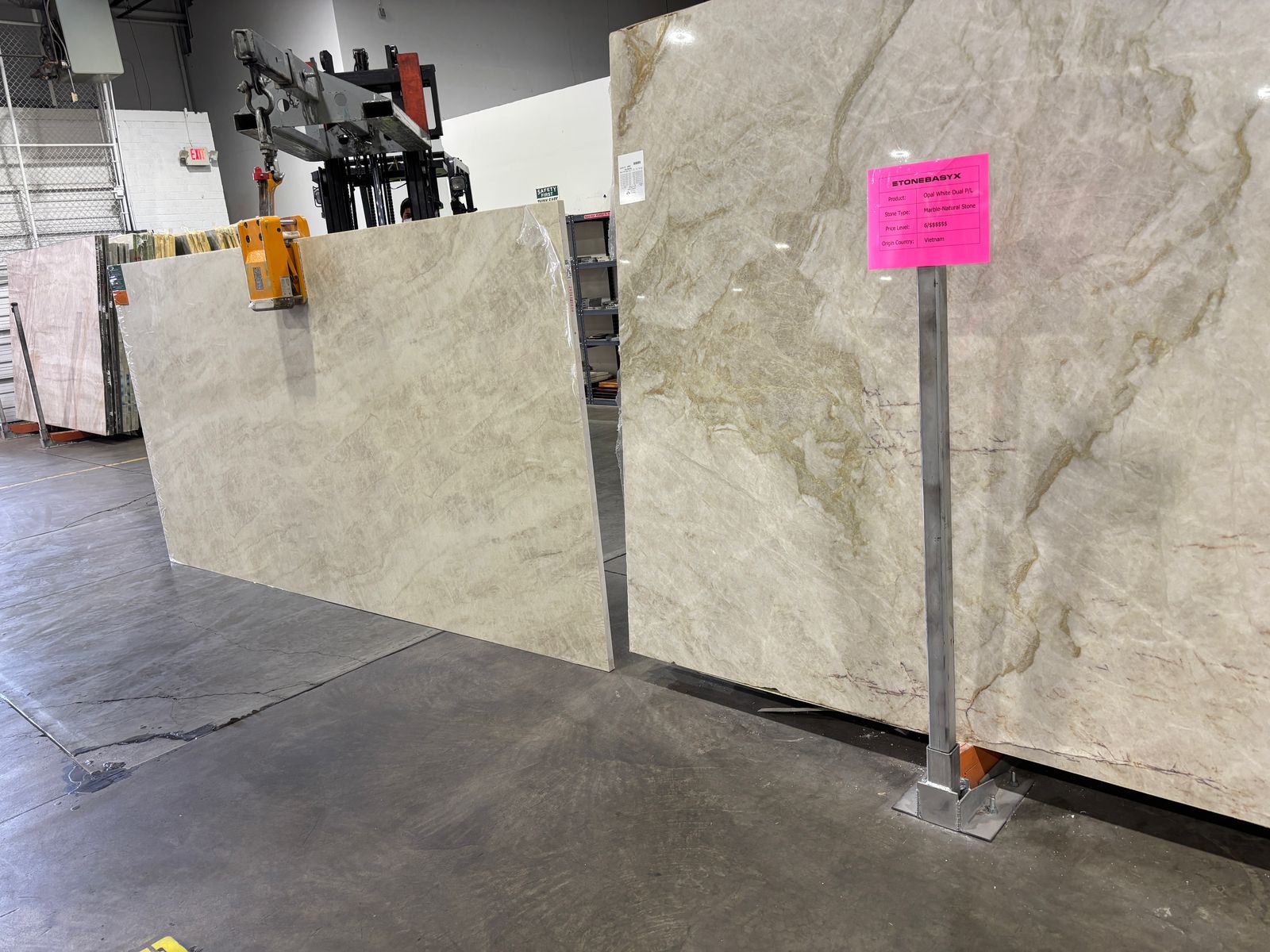
Taj Mahal Quartzite is a natural stone, quarried from the earth and cut into slabs. Despite its name, quartzite is not the same as quartz. Quartzite forms when sandstone is subjected to intense heat and pressure deep within the earth, making it extremely dense and hard.
What Is Taj Mahal Quartz?
Taj Mahal Quartz is a man-made engineered stone designed to mimic the look of Taj Mahal Quartzite. It’s made by combining roughly 90–93% crushed natural quartz with resins, pigments, and polymers. The result is a more uniform appearance and a more predictable material for fabrication.
Cost of Fabrication: Quartzite vs. Quartz
Here’s a side-by-side comparison of the typical fabrication and installation costs for both materials:
| Material | Slab Cost (per sq. ft.) | Fabrication/Installation Cost (per sq. ft.) | Total Estimated Cost (per sq. ft.) |
|---|---|---|---|
| Taj Mahal Quartzite | $90–$120 | $45–$70 | $135–$190 |
| Taj Mahal Quartz | $60–$80 | $30–$50 | $90–$130 |
Prices vary by region, slab quality, and project complexity.
Why Is Taj Mahal Quartz Less Expensive to Fabricate?
The price gap largely comes down to how easy the material is to work with during fabrication:
1. Hardness & Density
Quartzite is much harder than granite, which means it’s extremely durable—but also much more difficult to cut and shape. It wears down diamond blades faster and takes more time and skill to fabricate. Quartz, on the other hand, is engineered to be easier to cut, polish, and install.
2. Risk of Cracking During Fabrication
Natural quartzite can be more brittle in certain areas, depending on veining and impurities. Fabricators have to be extra careful not to crack or chip the stone, especially around sink cutouts and edges. Quartz is more consistent and less prone to cracking, making the process smoother and safer.
3. Specialized Tools & Labor
Working with quartzite often requires heavier-duty tools, slower cutting speeds, and more experienced labor — all of which drive up fabrication costs. Quartz, by contrast, is more forgiving and can be worked with standard tools and techniques, reducing time and labor expenses.
Leave A Comment