
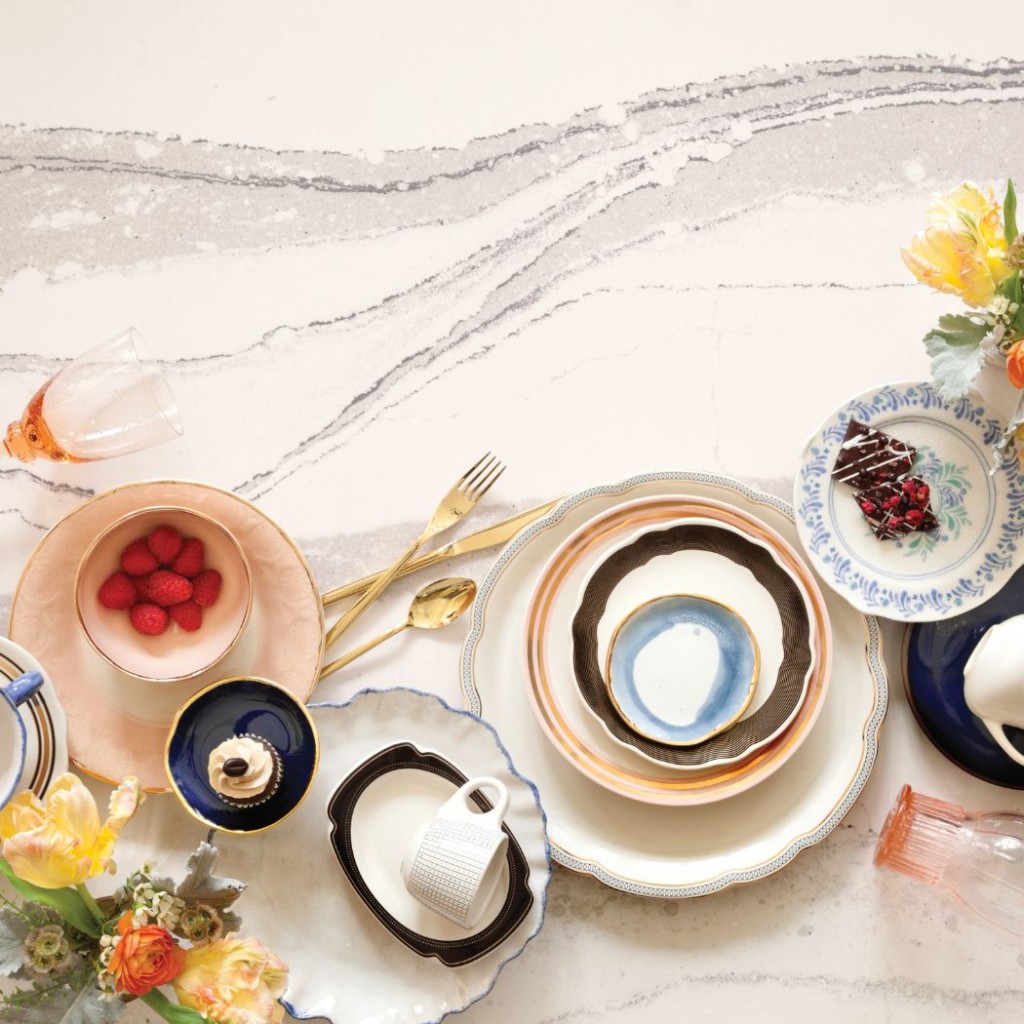
 🔍 Key Features of Next-Gen Quartz:

1. Low-Silica Formulations
-
These contain less than 40% crystalline silica (sometimes even under 10%), compared to the traditional ~90% in classic quartz countertops.
-
Some brands use natural binders or recycled materials (glass, stone dust, etc.) to bulk up the content without relying on silica.
2. Alternative Binders
-
Traditional quartz uses a polymer resin mixed with crushed stone.
-
New versions use different binders or hybrid composites that still deliver a stone-like look and feel but with much lower health risk during cutting.
3. Maintaining the Quartz Aesthetic
-
These products are engineered to still have the sleek, marble- or granite-inspired patterns that made quartz so popular—so you’re not sacrificing style for safety.
🏷️ Brands to Watch (and What They’re Doing):
🔹 Caesarstone
-
They’ve announced a low-silica line coming to Australia first, then globally.
-
Products are being reformulated to meet new legal standards while preserving design quality
-
Revolux
- 4R Technology –
-
Looks like quartz.
🔹 Cosentino (Silestone)
-
Their “HybriQ+” technology uses recycled materials and low silica content.
-
Up to 20% of the surface is made from recycled glass and other components, reducing silica and environmental impact.
🔹 Laminam, Neolith, Dekton
-
Not quartz per se, but sintered stones (ultra-compact surfaces) are being promoted as quartz alternatives.
-
Silica content is low, and they’re non-porous, heat-resistant, and ultra-durable.
🏠 Pros for Homeowners
✅ Safer for fabricators
✅ Still non-porous and low-maintenance
✅ Keeps the modern look people love
✅ More sustainable (recycled content is a bonus)
✅ Positions your remodel as “future-proof”
🤔 Any Downsides?
-
May cost a little more due to newer tech and certifications.
-
Availability varies by region—Australia is seeing more of it first because of the ban.
-
Some fabricators may still be adjusting to new materials and cutting techniques.
Leave A Comment